








































Each recession brings its own unique dynamics in terms of how businesses operate. The priorities of consumers change, cash becomes an important commodity, and the companies that have grown rapidly find it hard to remain profitable. But throughout history, recessions have always offered an opportunity to businesses that are prepared ahead of time, made smart decisions, and utilized technology.
Whether a company survives or thrives amid recession periods does not depend much on luck. What it depends on is discipline in financial planning, wise decision-making, effective cash flow management, and using artificial intelligence for business in order to capitalize on opportunities that others fail to see.
Here, we will explain how modern companies can increase their resilience, discover new opportunities for growth, and develop competitive advantages when faced with economic instability. We will also show you how Real Wealth Business enables entrepreneurs to make wise decisions based on practical financial frameworks rather than assumptions.
Practical Approaches for Turning Economic Uncertainty into Sustainable Business Growth
How Recessions Generate Hidden Opportunities
Recessions tend to lower the demand in certain industries, but they also change consumer behavior.
Businesses that understand these changing patterns often discover:
- Less competition from weaker businesses
- Lower customer acquisition costs in selected channels
- Better hiring opportunities
- Reduced supplier costs
- More affordable technology investments
- Increased need for efficiency-oriented approaches
In accordance with the research from the National Bureau of Economic Research (NBER), many of the most successful firms enhanced their competitive positioning in the long term through strategically placed investments in recessions rather than implementing cuts across the board. In a similar vein, McKinsey & Company states that firms that strike a balance between strict cost management and strategic investments in growth are more likely to outperform competitors following a recessionary period.
Instead of regarding recession as merely a period of surviving, the most successful firms consider recession as an opportunity to increase efficiency and build on future growth.
Financial Planning Becomes Your Most Powerful Competitive Advantage
Recession brings into light flaws which are usually concealed in times of fast economic growth.
Proper financial planning allows a business owner to provide answers to important questions before these problems escalate.
These questions include:
- For how long current cash flow will be enough to sustain operations?
- What is the most profitable product?
- Which products generate the highest profit margins?
- Which expenses create little business value?
- How much revenue decline can the business withstand?
- Which investments should continue despite uncertainty?
Businesses that regularly review financial forecasts generally make faster and more confident decisions than those relying on instinct.
Protect Cash Before Chasing Growth
Cash flow—not revenue—is usually the biggest challenge during economic uncertainty.
Strong businesses prioritise:
- Maintaining healthy operating cash flow
- Negotiating better payment terms
- Reducing unnecessary fixed costs
- Building emergency cash reserves
- Monitoring weekly liquidity instead of monthly reports
Businesses with stronger liquidity have greater flexibility to invest when attractive opportunities appear.
What are the first steps to protect cash in a recession?
The first priority is understanding exactly where cash is being generated and where it is being lost. Review operating expenses, improve collections, reduce slow-moving inventory, delay non-essential capital spending, and create rolling cash-flow forecasts covering at least the next 90 to 180 days. This gives business owners time to act before liquidity becomes a problem.
Diversify Revenue Sources Rather than Depend on One
The main risk associated with economic downturns is dependence on one particular customer group, product line, or revenue source.
Firms become much more resistant to recessions when their revenue sources are diversified.
Examples include:
- Subscription services
- Consulting packages
- Digital products
- Training programmes
- Premium customer support
- Intellectual Property Licensing
- Strategic Alliances
Diversification provides stability without the need for substantial growth in operating expenses.
How do I generate new sources of income when there is a recession?
The best way to begin would be to focus on the customer base you already have rather than trying to explore new ones. This could be related to other services, continuous incomes, digital products, special support packages, etc.
AI for Business Is Becoming a Recession Survival Tool
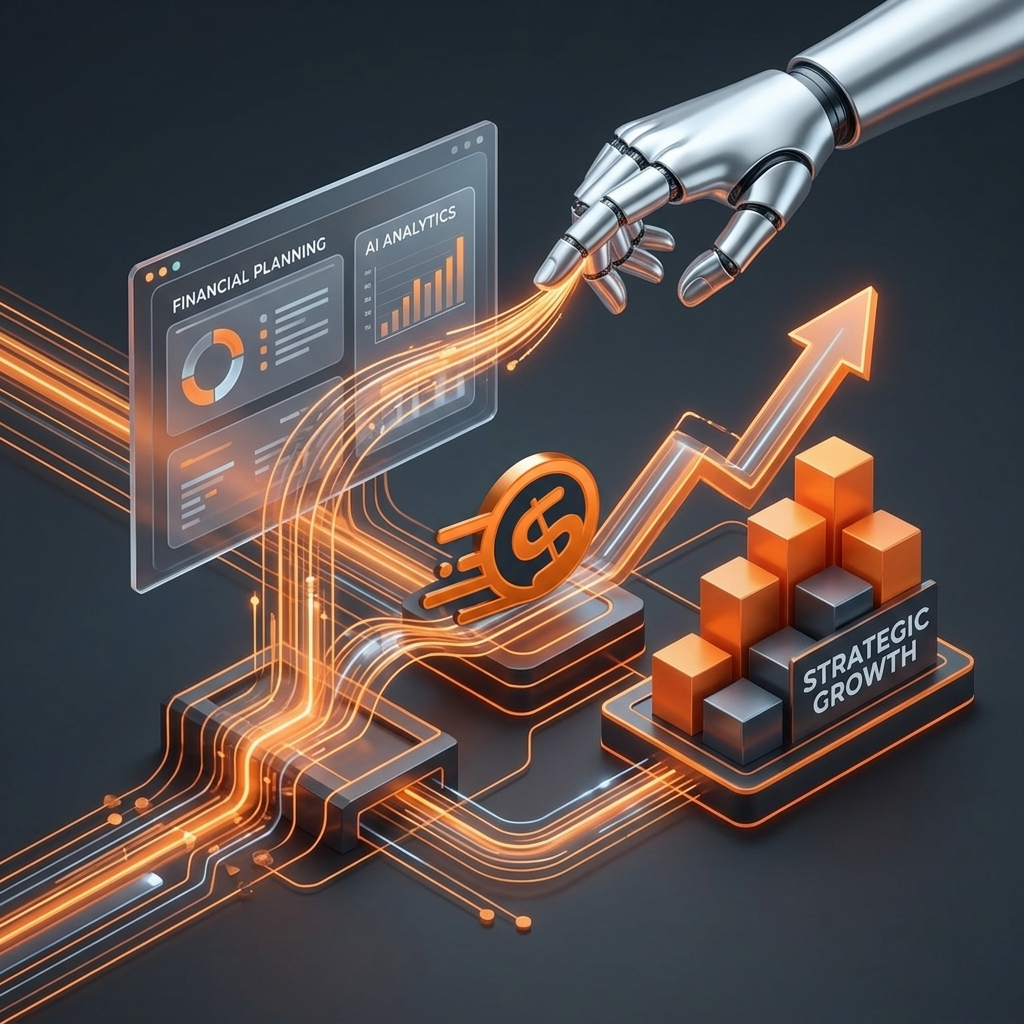
Economic uncertainty increases the importance of making decisions based on evidence rather than assumptions.
Modern AI for business helps companies analyse far more information than traditional spreadsheets.
Practical applications include:
- Cash flow forecasting
- Demand prediction
- Customer segmentation
- Inventory optimisation
- Pricing recommendations
- Risk identification
- Sales forecasting
- Competitive monitoring
Rather than replacing business owners, AI improves decision quality by reducing uncertainty.
Businesses combining experienced leadership with intelligent data analysis often respond faster to changing market conditions.
Combine Business Automation with Human Expertise
Successful organisations use business automation to remove repetitive work while allowing leadership teams to focus on strategy.
Automation can improve:
- Invoice processing
- Customer communication
- Lead qualification
- Financial reporting
- Expense tracking
- Inventory updates
- Document management
- Performance dashboards
Automation lowers operating costs and increases accuracy and efficiency.
Does AI support my decision-making when my business faces a recession?
Yes. AI can quickly analyse financial information, spot patterns in spending, predict future cash flow, recognize inefficiencies, and model multiple business situations. The input from a person is still required, but AI helps make quicker decisions in times of uncertainty.
Does AI assist in finding profitable niche markets during the recession?
Yes. There are tools that help find underserved markets by analysing customers’ behaviour, demand on the Internet, competitors’ positioning, price trends, and industry changes.
How to use AI for cash flow forecasting during the recession?
AI uses a combination of past financial data, seasonal trends, customers’ payment behaviour, and other factors to predict future income and expenditures of your business. It helps to anticipate possible shortages of money and change spending habits before problems occur.
Make a Scenario Planning Plan for a Recession Period
No forecast is absolutely precise.
No forecast is perfectly accurate.
Rather than guessing one future, a resilient company should be ready for multiple possibilities.
Think of three realistic scenarios:
Best-Case Scenario
- Revenue remains stable
- Customer retention improves
- Expansion continues selectively
Expected Scenario
- Moderate revenue decline
- Controlled operating costs
- Selective investment
- Improved efficiency
Worst-Case Scenario
- Significant reduction in sales
- Emergency cash preservation
- Temporary cost restructuring
- Alternative financing options
Preparing multiple scenarios reduces panic and enables faster decision-making.
What is recession scenario planning for business?
Scenario planning involves preparing practical action plans for different economic outcomes before they occur. Instead of reacting emotionally to market changes, businesses already know which expenses to reduce, where to invest, and how to protect cash under each scenario.
Understand How Customers Behave During a Recession
Customer priorities change noticeably during economic uncertainty.
Common behaviour includes:
- Comparing prices more carefully
- Delaying large purchases
- Choosing trusted brands
- Expecting stronger customer service
- Looking for measurable value
Businesses that clearly communicate return on investment often outperform competitors relying solely on discounts.
Instead of competing only on price, focus on reducing customer risk, improving convenience, and demonstrating long-term value.
Industries That Often Show Greater Resilience
While no industry is completely recession-proof, several sectors typically demonstrate stronger resilience because they provide essential or efficiency-driven solutions.
These often include:
- Healthcare
- Financial advisory services
- Business software
- Cybersecurity
- AI solutions
- Business consulting
- Logistics
- Essential consumer goods
- Repair and maintenance services
- Education and professional training
The unifying factor is not the industry—it is addressing customer problems that cannot be easily delayed.
Which businesses are recession-proof in 2026?
There are no completely recession-proof businesses. But those businesses that provide essentials, efficiency, healthcare, finance, cybersecurity, AI, and subscription solutions tend to be more stable during tough economic times.
Build a Recession-Proof Business Model
Building a business model for long-term success lies in building systems and not just depending on the good fortunes of the market.
Stable businesses always emphasize the following factors:
- Financial planning
- Cash flow
- Recurring revenues
- Efficiency
- Data-driven decisions
- Customer retention
- AI-supported forecasting
- Continuous business improvement
These principles make it possible for organisations to remain competitive irrespective of the state of the economy.
How can I develop a recession-resistant business model?
Create a business model that is able to adapt to situations quickly. Develop a strong financial management system, diversify income streams, have enough cash flow, embrace AI for business, embrace business automation, and constantly evaluate customers’ requirements.
Build Smarter Financial Planning and AI for Business Strategies with Real Wealth Business
Economic uncertainty rewards preparation—not prediction.
Real Wealth Business enables entrepreneurs, business owners, and decision makers to turn complicated financial issues into solid growth plans. Whitepapers based on research, financial planning tools, AI business insights, and other strategic advisory materials will help businesses increase cash flow, become more efficient, find ways to generate profits, and make smart decisions for the future.
Be it the need to create a recession-proof business model, utilize AI for business forecasting, conduct business automation, or create solid business growth strategies – at Real Wealth Business you will get evidence-based advice and enable better decision making at all stages of business cycles.
Economic situations might not be controlled by businesses – but the way businesses prepare for them can be. Those companies who prepare for the future now are usually ahead of others in their industry once the economy picks up again.