





















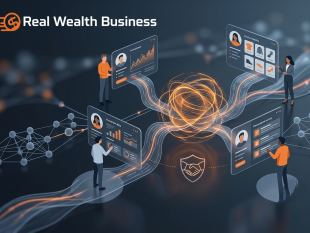
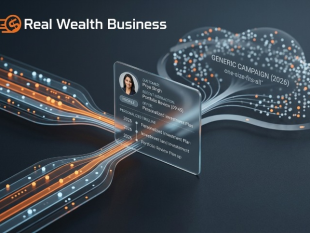





Envision stepping into a store whose shelves move by themselves and rearrange themselves in front of you, offering precisely the products you need, even your tastes, budget, and mood taken into account.
In the digital world, what was once a utopian concept has become a requirement for businesses today.
Today’s consumers don’t only like personalization. They require it as part of the product or service they receive.
Businesses can say goodbye to generic, mass marketing and create highly targeted communications.
All it takes is a smart use of machine learning, which will allow them to see each user individually.
Our manual lays out clearly, step by step, the ways a company can use a smart data strategy so that instead of one-time website visitors, the company gets lifelong supporters of the brand.
Why AI Personalization Is Transforming Modern AI for Business Strategies
What is personalization in AI for Business and how is it an important factor for modern businesses!
Predictive models using machine learning are a part of AI personalization. They enable the program to interpret the customer’s behavior in real-time.
As a result, the content that the consumer accesses is immediately updated based on preferences.
Until quite recently, conventional customer personalization was merely a set of segments. It was only age or ZIP code that decided how people were grouped.
Furthermore, shopping patterns of two people from the same demographic can be entirely diverse.
That is exactly why traditional customer personalization usually falls short.
A customer’s in-the-moment activities can be mapped using AI, adding another dimension to AI in marketing.
- What did the person search for,
- The part of the website the user has scanned
- Where and what the customer has clicked.
It also closes the circle between unprocessed information and customer personalization. Hence, it enables a customization of the user journey that aligns with the customer’s needs.
Therefore, if a brand can deliver a one-size-fits-all customer experience, it becomes easier for consumers to decide to buy.
Because of this, the customer can find precisely what they need on the first attempt.
Traditional Personalization vs. AI Personalization
Traditional setups use rigid, rule-based systems. A marketer writes an “if-then” rule: If a user views a jacket, show them a scarf.
This method cannot scale across millions of visitors or account for real-time changes in decision-making.
AI personalization relies on predictive recommendations.
Moreover, it processes thousands of data variables across multiple customer touchpoints simultaneously. This helps to adapt to a user’s changing intent within seconds.
Machine learning wins for long-term business growth. It continuously learns from its mistakes without needing human updates.
Is AI Personalization Better Than Rule-Based Personalization?
Yes. Rule-based systems break down when user paths become complex. AI scales effortlessly and reads real-time context.
Moreover, it automatically uncovers hidden buying patterns that humans miss.
How AI Personalization Directly Increases Conversion Rates
Traditional marketing focuses only on demographics, so the products are made for the most populous customer group. Nevertheless, customer demographics only tell so much.
One cannot really tell why someone decided to visit your website. Besides, you also will have no idea whatsoever about their purpose.
AI, instead of customer demographics, analyzes customer intent in great detail as the first step of decision making.
Machine learning can even accurately predict a user’s needs based on their previous behavior. Simply analyze three things:
- Live clicks
- Mouse movements
- Search terms.
This information, based on customers’ intent, is used to create dynamic website content and a personal recommendation system that matches individual customer needs.
A customer who has been on the site several times will not see the generic homepage but will be offered the items that would best match the purchase(s) they have been making.
Smart email personalization and behavior-driven CTAs are additional areas where this technique is being applied to the fullest.
Places in the Customer Journey Where AI Personalization Generates More Conversions
- Landing pages: Immediately switch headlines and visuals to match the ad that was clicked on.
- Product pages: Show “frequently bought together” items for a user’s specific budget or lifestyle.
- Checkout pages: Present related, last-minute add-ons while not slowing the sale.
- Email campaigns: Send reminders about an abandoned cart, including the items the customer left behind, along with a suitable discount if this happens at, say, the same time.
- Mobile apps: Inform the user with a message based on their location (e.g., send a message if they are near a physical store to get a reward and an offer at the same time)
- Customer support: Direct users to relevant help using chatbots that know customers’ order history and can answer specific questions.
How Does AI Personalization Increase Conversions?
AI increases conversions by removing the need for customers to hunt for products.
It presents the right product, offer, and message at the exact moment the user is most likely to buy.
How AI Builds Customer Loyalty And Encourages Repeat Purchases
One happy customer is great. Getting a repeat purchase, however, is where businesses really benefit.
Personalizing the customer experience is key to developing an emotional bond with the customer.
It basically conveys that a brand has a customer’s profile at hand, remembers the customer, and, thus, makes no wasted effort by the customer.
Now, AI can perform all these tasks simultaneously:
- Personalized rewards
- Loyalty programs
This way, customers can get discounts on the items they usually buy the most, for example, whereas other customers could get other types of benefits.
Meanwhile, machine learning also helps launch predictive retention campaigns.
This happens when a buyer is detected to have reduced their buying frequency.
The machine will not only flag this change but will also send the customer a message or a new product offer tailored to their interest.
Customer communication and machine learning can act together to improve customer experience.
The idea is that the support system anticipates customers’ needs and, therefore, solves problems even before the customer voices their concerns.
These proactive customer service measures directly increase customer lifetime value (CLV).
Can AI Personalization Actually Improve Customer Loyalty and Repeat Purchases?
Yes. When customers receive tailored recommendations and rewards, they feel understood.
Moreover, this positive experience builds trust, making them much less likely to switch to a competitor.
What Types Of Customer Data Power AI Personalization?
AI mainly uses first-party data instead of unreliable third-party cookies for constructing a personalized experience.
The technology combines different sources to create a full picture of the customer. You only have to monitor the behavioral aspect. The list is as follows;
Active browsing behavior- How people scroll through the page- and the clicking history.
With these elements, concrete shopping patterns and device or geographical signals will help you understand the user’s situation.
You can combine this with a customer’s own preferences expressed directly and their former CRM or support communications for real customization.
The AI identifies the main behaviors for you simply. The idea is to look at all contact points.
The future suggestions, as a result, will be closely matched with the user’s background and behavior habits.
Developing trust through proper data gathering:
- Consent management: Get the user’s written consent via a clear and explicit opt-in form before gathering any of their information
- Transparency: Describe in detail how consumer data would be used to enhance their shopping experience
- Ethical AI: Guarantee that the customer profiles handled by your algorithms are treated justly without discrimination
- Data Security: Safeguard stored information with high-level encryption and secure servers
- Privacy-first personalization: Concentrate only on first-party data to honor the new consumer privacy norms.

What Data Does AI Use For Personalization?
AI uses first-party data to understand user intent. This includes:
- Website clicks,
- Buying history,
- Location signals,
- Search terms,
- Direct customer support logs
How Does AI Personalization Impact Data Privacy And User Trust?
Personalization can feel invasive when handled carelessly. Businesses must protect trust by being completely transparent about data collection.
You should offer easy opt-out options. Moreover, you can also use the data solely to add real value to the customer journey.
Maximizing Customer Engagement With AI Personalization
Generic marketing blasts create digital noise, causing users to tune out. AI cures this fatigue.
They just need to deliver relevant experiences that match the user’s exact state of mind.
The system analyzes historical patterns to message users when they are most active, through predictive engagement.
Omnichannel personalization ensures this experience remains seamless whether a buyer switches from a mobile app to a desktop site.
Businesses see dramatic improvements in customer satisfaction because every interaction feels helpful rather than intrusive.
They can use context-aware recommendations and highly personalized messaging.
How Does AI Create a Better Personalized Customer Experience?
AI tracks real-time actions to show content, products, and messages that fit the user’s immediate context, making their digital journey fast, fluid, and intuitive.
Next Best Experience (NBX): The Future Of AI-Powered Customer Interactions
The Next Best Experience (NBX) represents a massive shift in customer management.
NBX determines the absolute best action for the customer relationship, even if that action is simply sending a helpful guide or doing nothing at all.
A Next Best Offer focuses strictly on the next product to sell,
Real-time decision engines power this process. These tools use predictive engagement models to evaluate millions of potential customer journeys instantly.
Businesses move away from aggressive selling and focus on building genuine, long-term relationships.
You just need to deliver personalized interactions throughout the customer journey.
Tackling customer engagement challenges with next best experience
- Information overload: This helps to filter out irrelevant promotions so users only see messages that matter.
- Low engagement: Swaps static layouts for dynamic content that updates based on real-time interest.
- Customer fatigue: Pauses marketing campaigns automatically if a user shows signs of burnout.
- Multi-channel inconsistency: Syncs data across all channels so support, sales, and marketing share the same context.
- AI-driven optimisation: Runs continuous background tests to improve interaction timing and messaging.
What Is The Next Best Experience?
NBX is an AI strategy that analyzes real-time customer data to predict and deliver the most helpful next action, piece of content, or offer for an individual user.
Refocusing on Customer Experience As The Driver Of Business Growth
In a crowded market, products and prices are easily copied. That is why customer experience has become the ultimate competitive advantage.
True personalization goes way beyond basic product recommendations. It is about making the entire brand interaction effortless.
Businesses can anticipate customer needs before they turn into complaints by using AI-driven relationship building.
It creates a massive business impact on revenue, retention, and word-of-mouth referrals when people feel heard and valued.
Deploying AI Personalization At Scale Across Every Customer Touchpoint
Personalization will only realize true growth if it isn’t limited to a small section. It should reach wherever a customer connects with the brand.
Consequently, bringing AI tools directly into website and ecommerce personalization platforms will be key.
The system should be built upon CRM integration and marketing automation as its foundation, which will then instantly share data.
Shared content can also help generate tailored pitches for sales enablement tools, while customer support teams can rely on it to fix problems, having full context of the user.
In the end, through AI-powered content recommendations, all blogs, videos, or guides will be exactly matched to the reader’s current context.
The most common problems that companies usually experience when trying to personalize using AI:
- Bogus data quality: Customer data that is incorrect, missing or unstructured can lead to wrong decisions made by the AI algorithms.
- Customer data locked in silos: Marketing, sales, and support data being stored in different systems.
- Missing AI strategy: Launching tools without clear business objectives or target KPIs.
- Technology integration: Making new AI software operate with obsolete legacy systems.
- Measuring performance: Having difficulties in figuring out the exact revenue boost that is due to personalization.
You also need to ensure that you are fully meeting privacy regulations. This includes:
- Global data laws
- Local data laws.
What Are the Common Challenges of Implementing AI Personalization?
The biggest hurdles are fixing poor data quality, breaking down siloed systems, ensuring strict data privacy compliance, and training teams to manage the software effectively.
Measuring The ROI Of AI Personalization Campaigns
Tracking the financial impact of personalization will ensure your tech investment yields a real return.
You also need to track your conversion rate. Try to take a closer look at shifts in average order value, and monitor customer retention.
Moreover, you can even check repeat purchase rate and customer lifetime value to see whether loyalty is building.
Lastly, keep a close eye on revenue per visitor, customer engagement metrics, and marketing ROI to demonstrate campaigns actually result in revenue.
How Do Businesses Measure the ROI of AI Personalization Campaigns?
Businesses measure ROI by comparing conversion rates, customer lifetime value, and total revenue between personalized website paths and the user experience on a generic site.
Best Examples Of AI Personalization In Ecommerce
Real-world results offer hints for a growing brand. E-commerce companies personalize product recommendations for items a customer viewed but did not buy.
AI-powered search corrects typos and displays intent-based results.
Dynamic homepage experiences change layout styles according to traffic sources.
Smart email automation sends alert recovery emails and subscription recommendations in mailboxes.
Personalized checkout journeys present add-ons aware of context just before payment.
What Are the Best Examples of AI Personalization in Ecommerce?
Top examples include Amazon’s tailored product grids, Netflix’s dynamic artwork matching user tastes, and Spotify’s custom playlist suggestions
Choosing The Right AI Personalization Tools For Business Growth
Selecting software involves looking at the main features that businesses might want to prioritize.
Consider a solution with deep CRM integration, compatibility with marketing automation, and powerful built-in analytics.
Prefer an AI tool that clearly shows its predictive capabilities but also is generally easy to implement.
Choose software that supports long-term scalability and aligns with your expansion goals without going over budget.
Which Tools Are Best for AI-Driven Ecommerce Personalization?”Look for a system that provides real-time data tracking, a clear predictive model, and seamless integrations with your current website and sales software.
Expert Insights From Leading Industry Research
Global industry analyses prove that customizing the buyer’s journey significantly speeds up revenue.
- McKinsey & Company: Research reveals that customized business activity brings in at least 40% more revenue per such activity for the companies that do it best than it does for ones that develop gradually.
- Deloitte: Surveys show a great discrepancy in consumer trust, with 92% of retailers thinking they personalize well enough, whereas only 45% of consumers feel so.
- Salesforce: Data show that 73% of customers want businesses to know who they are to deliver a customer-contextual experience at one, two, or three touchpoints.
- Adobe Experience Cloud: Their reports point out that if users get timely and personalized experiences, they won’t be frustrated and would be less likely to abandon the cart.
- Google: Advertising campaigns where dynamic ads driven through users’ intent constantly outcompete those using a segment-based targeting method such as demographic.
- Microsoft: Their report balances AI suggestions with responsible AI and transparent data privacy practices.
- IBM Institute for Business Value: An upward shift in the adoption of automated and predictive personalization systems is noted to combat marketing fatigue.
- Gartner: Their message is that a traditional, static approach can turn out to be counterproductive, whereas real-time context delivery can be the true sign of a mature strategy.
Key Takeaways Businesses Can Apply Immediately
Firstly, a company should align with its data model before buying AI technology for a long time period.
It is also essential to ensure data consistency between your marketing/sales/sales/management software and your CRM to deliver live, accurate user profiling across your team and to all other departments.
Small and medium-sized companies are advised to take a step back from launching large predictive campaigns until returning visitor reports are automated and working smoothly.
How to Start Using AI Personalization in Your Business
Adopting a new system can appear daunting at first, but you don’t necessarily have to reorganize your whole business within an unrealistic timeframe.
A gradual, structured implementation is key to building an excellent data infrastructure without compromising your business activities.
This guide will help you bring automated systems to market, test them, and increase sales volumes all at the same time.
- Step 1: Clarify customer goals. Identify specific areas of the sales funnel where customers are abandoning, for instance, at the checkout stage, a high cart dropout rate.
- Step 2: Obtain customer data via your own means. Use users’ direct actions on the website, their browsing history, and purchase logs instead of relying on third-party user behavior tracking methods.
- Step 3: Use AI to group the customers smartly. Allow machine learning to dynamically divide your users into groups based on live buyer intentions rather than fixed demographic criteria.
- Step 4: Customize all customer interactions. Change online headlines, email offers, and product suggestions dynamically in real time.
- Step 5: Perform ongoing tests and improve.
- Step 6: Monitor the business results.
- Step 7: Continue the successful activities.
How To Use AI For Personalized Customer Experiences?
Start by setting clean tracking infrastructure for first-party data. Use this incoming data to feed machine learning tools that automatically alter website layouts, product grids, and email marketing workflows based on live user intent.
Can Small Businesses Benefit From AI Personalization?
Yes. Smaller brands can leverage built-in e-commerce tools to offer tailored product recommendations and smart email flows without needing enterprise budgets.
Is AI Personalization Expensive For Small Businesses?
No. Most modern software platforms use scalable pricing models, allowing growing brands to pay only for the volume of data or users they actively process.
How Long Does It Take To See Results From AI Personalization?
Basic automated workflows, like cart recovery or tailored homepage grids, can show measurable conversion rate improvements within a few weeks of activation.
How Real Wealth Business Helps You Build Smarter AI for Business Strategies with AI Personalization
Navigating digital transformation requires clear financial clarity and strategic direction.
As a trusted Business Finance Advisor in India, Real Wealth Business helps entrepreneurs demystify complex technology like machine learning and predictive marketing.
We break down how smart systems impact your bottom line, guiding you through sustainable business growth strategies, digital investments, and modern customer personalization practices.
Explore our expert insights, practical financial roadmaps, and business guides today to scale your brand responsibly.