























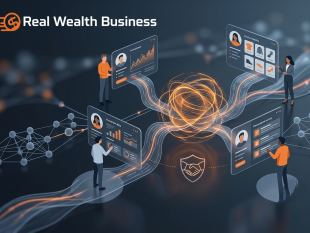







Content funnels are more than just a series of touchpoints brought about by digital marketing. As the industry matures, content funnels are increasingly enhanced, focused on the end user, and backed by data to move users through the process until conversion.
Therefore, brands need to rethink control, distribution, and measurement of content to facilitate easily repeatable options with meaningful KPIs. A headless CMS, paired with real-time analytics, can offer such an opportunity.
With a decoupled system for content creation and dissemination, as well as a system that renders the ability to gauge data performance in real time, brands can offer a customizable, high-performing funnel experience that grows and changes with the times.
Why The Traditional Content Funnel Cannot Scale
The traditional content funnel is based on templates, pages, and siloed assets. Transferring a landing page or producing new content is either based on a new template and distribution efforts or content goes unseen as there are no easy avenues to see how people traverse a funnel in the first place.
Furthermore, little is observed as content repurposing, let alone metrics encouraging it. Storyblok in action – case studies demonstrate how a modular, API-driven approach can resolve these issues by making funnels more transparent, adaptable, and scalable.
Thus, in the short run, the traditional funnel works, but in the long run, it fails as underused efforts fail to scale what was once good intentions.
The Headless CMS That Fuels The Ability To Scale Funnels
A headless CMS is designed for content operations to scale. Since a headless CMS is agnostic of where content is viewed, a marketer has the ability to control and manage content in one hub but deploy it across all new channels that emerge with little-to-no effort.
Each aspect of the funnel, awareness, intention, consideration, conversion, and loyalty, can be robust with modular blocks of content that are designed to be reused and governed via tagging and metadata.
Each can be pushed via API into websites, apps, email engines, and ad networks without duplicating effort or content. Therefore, marketing teams can create and maintain multiple iterations of funnels effectively and efficiently.
How To Build Content Around The Buyer Funnel
A scalable funnel depends upon the buyer’s journey; therefore, a headless CMS grants the opportunity to structure content around funnel activity with independent pieces. For instance, a how-to video or a Q&A blog can lead prospects from the top of the funnel to the middle of the funnel with product comparisons, testimonials, and explainer videos.
The bottom of the funnel consists of calls-to-action, pricing grids, and demos. Each of these can be housed in a headless CMS as separate pieces and tagged with the proper metadata that aligns them to their eventual place; thus, allowing for an assembly line of sorts, where, based on buyer persona or type of engagement, assets can be found and formed easily.
Funnel Optimization With Real-Time Data
The ability to integrate analytics into a headless CMS workflow turns otherwise static funnels into responsive, operating machines. Whether funnels are assessed through Google Analytics or Mixpanel or the organization has a CDP integrated with the CMS, the marketing team can determine the success of exposure to content and UX at every stage of the funnel. Scroll depth. Bounce rate. Conversion rate. Time on page.
Each of these can be evaluated down to the digital element, giving marketers insight into which content blocks appeal and which drive people away and enabling them to iterate on the fly to improve funnel efficiencies based on real-time data rather than wait until end-of-campaign recaps.
Personalization Throughout The Funnel Is Possible
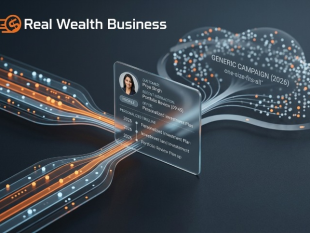
Static scalable content funnels also need to be dynamic. As the CMS connects with other platforms and gets the proper data, it can create real-time personalization at every stage of the funnel. If a conversion happens from Facebook Ads directed to females 25-35, that information can be passed into the CMS for more dynamic content blocks served based on audience segment, traffic origin, or prior actions.
Someone who is seeing this content for the first time may need basic-level explanations, while someone who’s been in the funnel before may be offered more comprehensive comparisons between products. When users get what they need, they’re less frustrated and more likely to convert, and all of this can happen under the same content architecture.
A/B Testing For Performance Gain Over Time
To improve funnel performance is to always test what it has to offer. The marketing team must assess how things work over time, and A/B or multivariate testing through a headless CMS is effortless. If certain content blocks need different iterations based on certain characteristics, the teams can create variations and serve them up to their audiences easily.
Then, with integration with analytics tools, teams can assess how messaging, imagery, or layouts perform at each funnel stage. Over time, assets are created that are proven successes that exist within the CMS; future campaigns can re-use these tested content modules with certainty.
Allowing Multi-Channel Funnels In The First Place
Funnels are no longer contained to your website or landing page. Customers and prospects travel through email, apps, social media, and digital ads. A headless CMS allows the content strategy behind your funnel to travel with it. Since presentation is separated from the decoupled experience, every place a customer encounters the funnel on devices and channels can access the same content library.
This promotes consistent messaging while giving individual design teams the ability to control how that content appears in each place. Therefore, funnels are no longer confined to linear paths; they are everywhere the customer is.
Scaling Funnels To Different Languages and Locations
Global brands must also scale funnels to different languages, locations, and markets. A headless CMS helps in the localization process at scale because content pieces can be versioned, tagged, and marked by language/geography.
Instead of creating a funnel from scratch, brands can select specific variations that apply to funnel intents and audiences need to engage on a regional level. Simultaneously, brands can push updates globally or on a regional basis if need be.
Analytics show which funnels work better in certain geographies, and insightful information can enhance international marketing efforts. This encourages global expansion and localized engagement all at once.
Team Collaboration Around Unified Funnel Intentions
Another way headless CMS enhances funnels is through integration with analytics for internal collaboration. Marketing, content, design, and development teams can operate with the same structured content template while relying upon organized performance data to make informed decisions.
When everyone is on the same page with expectations and achievements, funnel intentions can be realized more quickly than ever before. Previewing, testing, and adjusting will no longer create bottlenecks for one team suffering from poor communication.
The faster this now collaborative team works to launch funnels, the easier it will be to scale without losing quality or brand integrity.
Automate Integrated Workflows To Scale A Funnel
If funnel creation isn’t properly scaled, it can overwhelm marketing teams; thus, automation is essential to ensure that overwhelmed marketing teams do not have the opportunity to provide a content funnel. A headless CMS creates the capacity for teams to develop integrated, automated workflows that allow for the transition of content from stage development to publication throughout the funnel.
Whether it’s automatic scheduling of top-of-funnel blog posts, mid-funnel email blasts, or release of landing pages for conversion, automated features allow for time sensitivity without manual hand-offs. This not only increases productivity, but it gets campaigns published on time, in use, and reduces lag.
Less Content Waste With Smart Reusability
Content demand is surging along with redundant efforts and ineffective practices. The best way to prevent content waste is to deploy a headless CMS that allows marketers to reuse effective blocks across different funnels, stages, and campaigns.
For example, if a mid-funnel persuasive testimonial block converts successfully and nurtures leads in one funnel, repurposing that same module in another funnel takes minimal time. In addition, analytics empower more intelligent reuse decisions by showcasing which blocks garner the most engagement and should be prioritized going forward.
AI And Headless Architecture Analytic Ease Into Funnel Automation
Finally, a headless architecture coupled with its associated analytics helps ease funnel automation thanks to the power of AI. Over time, based on success inflation and organized content structures, AI will one day be able to determine which content blocks appeal to which audiences best and automatically create funnels for engagement and conversion.
Instead of being held rigid as traditional pathways, funnels can become fluid experiences delivered at scale with little human effort and improved over time with machine learning.
Conclusion: Building Funnels That Learn and Grow
No more guessing or forcing a scalable content funnel to materialize. Content funnels are built through structural means based on learned strategy, flexibility, and data.
The content marketing digital funnel of the future isn’t a linear process that simply puts customers through their paces; it’s a constantly evolving, sustainable ecosystem that relies on continued resources, real-time audience awareness, and technology that facilitates real-time change.
Content marketers, no matter where they are within the funnel, understand that consumer behavior evolves, digital demands increase, and the pressure for relevant, contextual, and personalized information available across touchpoints, platforms,a nd devices is staggering for marketing teams charged with maintaining momentum.
Yet combine the flexibility of a headless content management system (CMS) with the learnable sophistication of real-time analytics, and it becomes clear how marketing teams can create a scalable funnel system that is effective and inherently adjustable.
Each piece of the funnel from awareness to purchase (and post-purchase loyalty building, too) can be constructed by the modular pieces of reusable content, all tagged, classified, and made available through application programming interfaces (APIs).
These modules can be easily edited for particular audiences, campaign goals ,and channel requirements to save time to market while maintaining brand consistency across all digital footprints.
The systems learn in the process. Real-time analytics hardwired into the headless CMS will allow marketers to understand where and how content is performing within the funnel and what prompts specific reactions.
As users engage with content, abandon their cart, pursue FAQs, or complete a purchase, these new actions immediately alert the funnel of potential pitfalls and concerns that marketers may not discover until after campaign deconstruction.
This information gives rise to reclassification of content within the funnel to meet customer expectations; it allows for visual hierarchies to shift or supporting graphics to emerge from textual content, as what resonates best can be learned.
From in-depth B2B purchase funnels with niche audiences to global e-commerce launches executed simultaneously across nations with varying languages, the architectural elements of a headless CMS allow marketing teams to scale quickly.
New localized versions can be spun up, A/B tested at the modular level, and campaign aspects can be dispersed across all channels and all features from one source of content. What was once messy, disconnected, and time-consuming is now easily manageable, cooperative, and immediately adjustable to need.
In today’s world, where attention spans are thin and the competitive need for seamless experiences is met with relevance at each click, that type of optimized, performance-driven appeal is critical.
Content funnels rely on a headless CMS to give companies the competitive advantage to do more in less time, not just for a surface-level increase in reach, but for a true personalized effort to make sure everyone gets exactly what they need when they need it and at a scalable level.
Read Also: