





















































































The Role of a Specialized Urgent Care Marketing Company
by Piyasa Mukhopadhyay Blog 18 September 2025

At its core, an urgent care marketing company is a specialized agency dedicated to helping urgent care clinics attract, engage, and retain patients through targeted marketing strategies. Unlike general marketing agencies, these firms possess an in-depth understanding of the healthcare industry, its unique regulations, and the specific patient journey for urgent care services.
Their service offerings are comprehensive, typically including:
- Search Engine Optimization (SEO): Optimizing a clinic’s online presence to rank higher in search results.
- Paid Advertising (PPC): Managing campaigns on platforms like Google Ads and social media to drive immediate traffic.
- Website Design and Development: Creating user-friendly, mobile-responsive, and conversion-optimized websites.
- Content Marketing: Developing informative blog posts, articles, and patient guides that address common urgent care needs.
- Online Reputation Management: Actively managing and soliciting patient reviews to build trust and credibility.
- Social Media Marketing: Engaging with local communities and promoting services on relevant social platforms.
- Local SEO: Ensuring clinics appear prominently in “near me” searches on Google Maps and other local directories.
Services Custom to the Urgent Care Patient Journey
Why should an urgent care clinic opt for a specialized marketing company instead of a general agency? The answer lies in the unique nature of urgent care. Patients seeking urgent care are often in immediate need, making their decision-making process rapid and highly localized.
A specialized firm understands this “urgency factor.” They know that approximately 81% of prospective urgent care patients are searching the web for the right center to fulfill their immediate needs, as highlighted by a study on patient search behavior. This necessitates marketing strategies focused on immediate visibility and conversion.
Specialized companies excel in:
- Local SEO Focus: They prioritize strategies that capture “urgent care near me” searches, optimizing Google Business Profiles and local listings to ensure your clinic is the first patients see.
- Mobile-First Approach: Recognizing that more than half of all web traffic to urgent care websites comes from smartphones and tablets, they design websites and campaigns for seamless mobile experiences.
- Online Booking & Telemedicine Integration: They integrate user-friendly online scheduling and, where applicable, telemedicine options, streamlining the patient journey.
- Community Outreach and Local Partnerships: Beyond digital, these companies often assist with tangible strategies like community events, health fairs, and partnerships with local businesses or schools, helping clinics embed themselves within the fabric of the community. This holistic approach builds brand recognition and trust, fostering patient acquisition.
Furthermore, specialized agencies understand the nuances of marketing for both single-location and multi-location urgent care centers. For a single clinic, the focus is hyper-local, dominating search results in a specific radius.
For multi-location groups, strategies involve maintaining brand consistency across all sites while executing localized campaigns for each, often leveraging centralized data and reporting to optimize performance across the network.
Why a General Agency Might Not Be Enough
The healthcare sector operates under stringent regulations that general marketing agencies may not fully grasp. One of the most critical is HIPAA compliance. An urgent care marketing company is well-versed in ensuring all marketing activities, from website forms to patient communication, adhere to HIPAA guidelines, safeguarding patient data security (Q16). This includes using secure communication tools and ensuring Business Associate Agreements (BAAs) are in place.
General agencies might also struggle with:
- Medical Terminology and Sensitivity: Crafting messaging that is both medically accurate and empathetic, avoiding language that could be misleading or inappropriate for healthcare.
- Conversion Tracking Specifics: Understanding how to integrate marketing data with Electronic Medical Records (EMR) systems to accurately track patient acquisition costs and ROI, which is crucial for urgent care centers.
- Addressing Common Challenges: Urgent care clinics face unique marketing challenges, such as fierce competition (with nearly 15,032 urgent care clinics in the United States, according to the UCAOA, the market is crowded), building trust quickly with new patients, and differentiating themselves from emergency rooms and primary care providers. Specialized marketing companies are equipped to address these head-on, crafting messaging that highlights convenience, affordability, and the specific services that make an urgent care clinic a better choice for non-life-threatening conditions.
Core Digital Marketing Strategies for Patient Acquisition
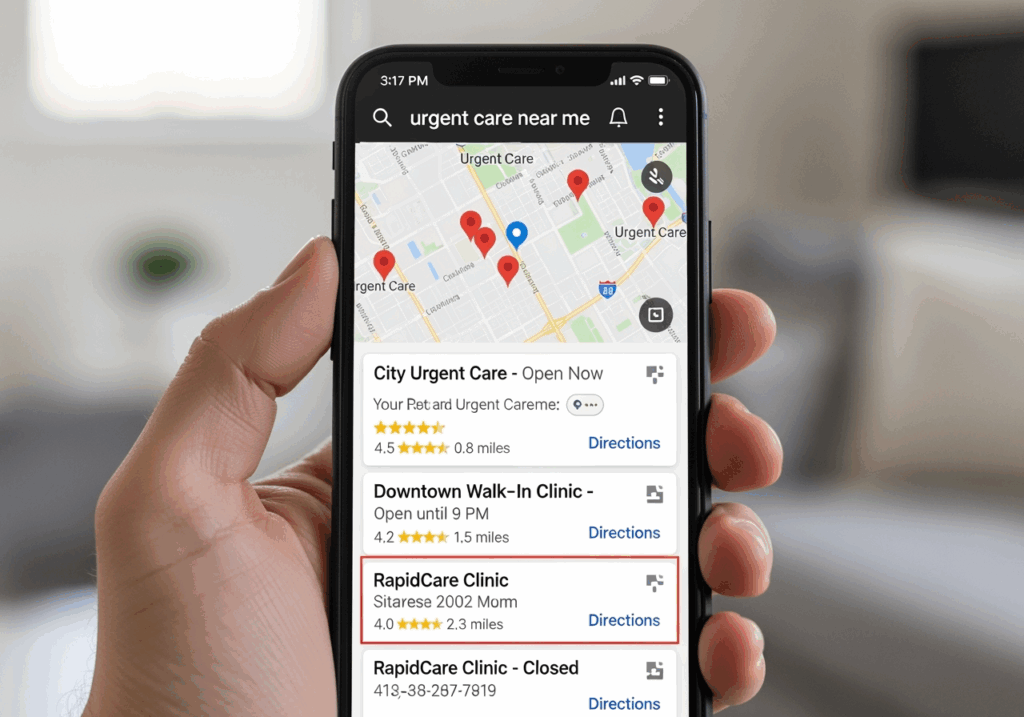
To effectively attract patients, urgent care centers must leverage a combination of digital marketing strategies. The most effective approaches center around three pillars: Search Engine Optimization (SEO), Paid Advertising, and a superior Website Experience. These strategies are designed to capture the attention of prospective patients precisely when they need care.
Dominating Local Search with SEO
Search Engine Optimization (SEO) is fundamental for urgent care clinics. It’s the process of optimizing your online content so that search engines like Google show it as a top result for relevant queries. For urgent care, this means appearing prominently when someone searches for “urgent care near me” or specific conditions like “flu treatment walk-in clinic.”
How does SEO help urgent care clinics attract more patients (Q4)?
- Local SEO: This is paramount. It involves optimizing your Google Business Profile (GBP) with accurate information, photos, services, and hours. Consistent Name, Address, Phone (NAP) data across all online directories is crucial. A strong local SEO strategy ensures your clinic shows up in the “local pack” results on Google Maps, which is often the first place patients look.
- On-Page Optimization: Your website content needs to be optimized for keywords patients are searching for, such as “urgent care [city name]” or “sprain treatment [neighborhood].” This includes well-written service pages, FAQs, and blog posts that address common health concerns.
- Content for Conditions: Creating valuable content around conditions treated at urgent care centers (e.g., “When to visit urgent care for a cold,” “Treating minor burns at home vs. urgent care”) establishes your clinic as an authoritative resource.
The impact of SEO is significant. For example, in one case study, 77% of new patients for a multi-location urgent care group originated from Google SEO (free leads), while only 3.77% came from Google Ads, significantly reducing dependency on paid advertising.
This organic visibility is powerful because it builds trust and provides a sustainable source of new patients. To learn more about the mechanics of how search engines work, you can consult resources like this article on Search Engine Optimization.
Driving Immediate Traffic with Paid Advertising (PPC)
While SEO builds long-term organic visibility, paid advertising, also known as Pay-Per-Click (PPC), offers immediate visibility and rapid patient acquisition. What role do paid advertising (PPC, Google Ads, Facebook Ads) campaigns play in urgent care marketing (Q5)? They ensure your clinic appears at the top of search results and in targeted social media feeds, capturing patients who need care right now.
- Google Ads: These campaigns place your clinic’s ad at the very top of Google search results for relevant keywords. This is crucial for urgent care, as patients often click on the first few results they see. Google search ads can boost awareness by up to 80%. For a deeper dive into how Google Ads function, you can visit the Google Ads Wikipedia page.
- Facebook Ads: While less immediate for urgent needs, Facebook and Instagram ads are excellent for building brand awareness, promoting specific services (e.g., flu shots, sports physicals), and retargeting website visitors. They allow for highly specific demographic and interest-based targeting.
- Geofencing: This advanced tactic uses location data to target potential patients within a specific geographic area, such as around a local school during a sports event or a busy shopping center. Companies like GroundTruth specialize in this technology, allowing clinics to serve ads to people physically present in areas where they might need urgent care services.
Urgent care centers typically spend between $1,000 and $9,000 per month on advertising, with an average spend of $3,600 per month per location. This investment, when managed by experts, can yield significant returns, especially for immediate patient needs.
The Critical Importance of Website Design and User Experience
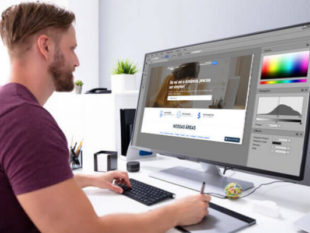
Your urgent care clinic’s website is often the first point of contact for a potential patient, making its design and user experience paramount for patient acquisition (Q6). A poorly designed, slow, or confusing website will deter patients, regardless of how good your SEO or PPC efforts are.
Key elements include:
- Mobile-First Design: Given that over half of all web traffic to urgent care websites comes from smartphones and tablets, your site must be perfectly optimized for mobile devices. It needs to load quickly, be easy to steer with a thumb, and have clear, tap-friendly calls to action.
- Fast Load Times: Patients in urgent situations won’t wait for a slow website. Every second counts. Fast loading speeds are critical for retaining visitors and improving search engine rankings.
- Clear Calls to Action (CTAs): Buttons for “Call Now,” “Get Directions,” and “Schedule Online” should be prominent and easily accessible on every page.
- User-Friendly Navigation: Patients need to quickly find information on services, hours, accepted insurance, and wait times.
- HIPAA-Compliant Forms: Any online forms for pre-registration or inquiries must be secure and compliant with patient privacy regulations.
A well-designed website acts as a 24/7 digital front desk, guiding patients efficiently from search to visit.
How to Evaluate an Urgent Care Marketing Company
Choosing the right urgent care marketing partner is a critical decision that can significantly impact your clinic’s growth and profitability. It’s essential to understand their pricing models, how they measure success, and what questions to ask during the vetting process.
Understanding Pricing Models and Typical Costs
What is the typical cost or pricing structure for urgent care marketing services (Q7)? Marketing companies generally offer several pricing models:
- Monthly Retainers: A fixed fee paid monthly for ongoing services like SEO, content creation, social media management, and PPC campaign management. This is the most common model.
- Project-Based Fees: A one-time fee for specific projects, such as a website redesign or a new branding initiative.
- Ad Spend vs. Management Fee: For paid advertising, you’ll typically have two components: the budget you allocate directly to platforms like Google Ads and Facebook Ads (ad spend), and the agency’s fee for managing those campaigns. It’s crucial to understand this distinction.
Urgent care centers typically spend between $1,000 and $9,000 per month on advertising, with an average spend of $3,600 per month per location. This figure often doesn’t include the agency’s management fee.
While cost is a factor, focusing on the value and return on investment (ROI) is more important than simply the lowest price. Patient acquisition costs for urgent care clinics can range from $6 to $17 per patient, demonstrating that effective marketing is an investment, not just an expense.
Measuring Success: ROI and Key Performance Indicators (KPIs)
How do urgent care marketing companies measure and report ROI (Return on Investment) for their clients (Q8)? A reputable firm will provide transparent reporting that clearly links marketing efforts to tangible business outcomes. Key Performance Indicators (KPIs) they track include:
- New Patient Volume: The ultimate measure of success, tracking how many new patients are acquired through marketing channels.
- Patient Acquisition Cost (PAC): The total cost of marketing divided by the number of new patients acquired. A lower PAC indicates more efficient marketing.
- Website Traffic and Engagement: Metrics like unique visitors, time on site, bounce rate, and pages per session.
- Lead Generation: Tracking phone calls (using call tracking numbers), online form submissions, and online appointment bookings.
- Online Reputation Metrics: Average star rating, number of reviews, and response rates.
Calculating ROI can be complex but crucial. For example, after implementing a comprehensive marketing plan, one urgent care provider increased monthly patient volume from 380-400 to 722, resulting in a calculated ROI of 24.4x (and up to 63.4x when considering lifetime value).
In another case, an urgent care clinic saw a 100%+ increase in new patients within a year without using PPC or social media ads, primarily due to strong SEO. These real-world case studies demonstrate the power of data-driven marketing.
Key Questions to Ask a Potential Urgent Care Marketing Company
When vetting potential partners, asking the right questions is vital (Q17). Here’s a list to guide your discussion:
- What is your experience specifically with healthcare or urgent care clinics? Look for a track record and understanding of the industry’s unique needs.
- How do you ensure HIPAA compliance and patient data security in all your campaigns? They should clearly outline their protocols and use of secure tools.
- What is your reporting process, and how frequently will we receive updates? Look for transparency, detailed dashboards, and regular communication.
- Can you provide case studies or success stories from other urgent care clients? Real-world examples validate their expertise.
- What does your team structure look like? Will our account be managed by specialists (e.g., SEO, PPC, content)?
- Do you offer a free proposal or audit of our current marketing efforts? Many agencies, including those offering services similar to the ForeFront urgent care marketing experts, provide initial consultations or audits to demonstrate their approach and potential value. You can often get a free proposal to start, like the option available via Slamdot’s Typeform.
- What is your approach to online reputation management and patient reviews?
- How do you stay updated on the latest trends and technologies in healthcare marketing?
Advanced Tactics and Comprehensive Service Packages

A truly comprehensive urgent care marketing package goes beyond basic SEO and PPC, integrating advanced tactics and a holistic approach to build trust and drive patient volume.
What are the key components of a comprehensive urgent care marketing package (Q11)? It typically includes a blend of digital and traditional strategies, all working in concert.
Building Trust Through Online Reputation Management
Online reviews are paramount. How do urgent care marketing companies help with online reputation management and patient reviews (Q10)? They understand that a strong online reputation builds immediate trust, which is crucial for patients making quick decisions.
- Proactive Solicitation: Implementing systems to encourage satisfied patients to leave reviews on Google, Yelp, Healthgrades, and other platforms.
- Active Monitoring: Using tools to track new reviews across various sites.
- Strategic Response: Crafting thoughtful, HIPAA-compliant responses to both positive and negative feedback, demonstrating that the clinic values patient input and is committed to quality care.
- Showcasing Positive Reviews: Integrating testimonials and high ratings into website content and marketing materials. A case study from Patient Care Marketing Pros showed a clinic’s organic traffic improved by 115% in one year, and calls to the clinic increased by 45%, partly attributable to a strong online presence and positive patient feedback.
Leveraging Data, Analytics, and New Technologies
How do urgent care marketing companies use data and analytics to optimize campaigns (Q12)? Data is the backbone of effective marketing. Specialized agencies use sophisticated analytics to:
- Identify Trends: Understand patient behavior, peak search times, and popular services.
- A/B Testing: Continuously test different ad copy, website layouts, and calls to action to see what performs best.
- Optimize Ad Spend: Ensure every dollar spent on paid advertising is generating the highest possible return.
- Personalize Experiences: Use data to segment audiences and deliver more relevant messaging.
What are the latest trends and technologies (e.g., AI, chatbots, geofencing) in urgent care marketing (Q15)?
- AI-Powered Chatbots: Integrating chatbots on websites can answer common patient questions 24/7, provide directions, and even assist with pre-registration, improving user experience and reducing staff workload.
- Geofencing and Hyperlocal Targeting: As mentioned earlier, geofencing allows for incredibly precise ad targeting based on physical location, reaching patients when and where they are most likely to need urgent care.
- Predictive Analytics: Using AI to forecast patient demand, optimize staffing, and tailor marketing efforts to anticipated needs.
Ensuring HIPAA Compliance in All Marketing Efforts
A non-negotiable aspect of healthcare marketing is HIPAA compliance. How do urgent care marketing companies ensure HIPAA compliance and patient data security in their campaigns (Q16)? They implement strict protocols to protect patient information across all digital touchpoints:
- Secure Website Forms: All contact or registration forms on the website use encryption and are designed to be HIPAA-compliant.
- Secure Communication Channels: Using encrypted email, SMS, or patient portal systems for any patient-specific communications.
- Business Associate Agreements (BAAs): Establishing formal contracts that outline the responsibilities of the marketing company in protecting patient data, as required by HIPAA.
- Staff Training: Ensuring all marketing personnel are trained on HIPAA regulations and best practices for data handling.
Frequently Asked Questions about Urgent Care Marketing
How long does it take to see results from urgent care marketing?
How long does it typically take to see results from urgent care marketing efforts (Q18)? The timeline for seeing results can vary significantly depending on the marketing strategy:
- Paid Advertising (PPC): You can often see immediate results with PPC campaigns, as your ads appear at the top of search results as soon as they are launched. Initial patient inquiries can come within days or weeks.
- Search Engine Optimization (SEO): SEO is a long-term strategy. While some improvements might be noticeable within 3-6 months (e.g., better local pack rankings), significant organic traffic growth and top keyword rankings typically take 6-12 months, or even longer in highly competitive markets. The effects of SEO are compounding, meaning results tend to grow over time.
- Website Redesign: A new, optimized website can improve conversion rates relatively quickly, often within a few months of launch, by providing a better user experience.
It’s important to set realistic expectations and understand that marketing is an ongoing process, not a one-time fix.
What are the biggest marketing challenges for urgent care clinics?
What are the common challenges urgent care clinics face in marketing, and how do marketing companies address them (Q13)?
- Fierce Local Competition: With the rapid growth of urgent care centers, many clinics are located in close proximity. Marketing companies address this by focusing on hyper-local SEO, targeted paid ads, and highlighting unique selling propositions (e.g., specific services, shorter wait times, patient amenities).
- Building Trust Quickly: Patients seeking urgent care are often new to the clinic. Agencies build trust through robust online reputation management, showcasing positive reviews, and creating informative content that establishes credibility.
- Differentiating from ERs and PCPs: Urgent care clinics need to clearly communicate their role as a cost-effective alternative to emergency rooms for non-life-threatening conditions, and a convenient option when a primary care physician isn’t available. Marketing companies craft clear messaging around these benefits.
- Managing Online Reputation: The constant stream of online reviews requires diligent monitoring and response, which specialized agencies handle efficiently.
How can clinics track patient acquisition and retention?
How can urgent care clinics track and improve patient acquisition and retention through marketing (Q20)? Effective tracking is crucial for understanding ROI and optimizing strategies:
- CRM Integration: Integrating marketing data with a Customer Relationship Management (CRM) system allows clinics to track patient journeys from initial contact to visit.
- Call Tracking: Using unique phone numbers for different marketing campaigns helps attribute phone calls directly to specific channels (e.g., Google Ads, website, social media).
- EMR Data: Linking marketing data with Electronic Medical Records (EMR) provides a complete picture, allowing clinics to see which marketing efforts lead to actual patient visits and revenue.
- Patient Lifetime Value (PLV): Calculating the average revenue a patient generates over their relationship with the clinic helps evaluate the long-term value of acquisition efforts.
What are the differences between marketing strategies for single-location vs. multi-location urgent care centers?
What are the differences between marketing strategies for single-location vs. multi-location urgent care centers (Q19)?
- Single-Location Clinics: Marketing focuses on dominating a specific geographic area. Strategies are hyper-local, emphasizing Google Business Profile optimization, community engagement within that specific neighborhood, and local keyword targeting. The goal is to be the undisputed choice for urgent care in a defined radius.
- Multi-Location Centers: These require a more complex, multi-layered approach. While each location still needs strong local SEO, the overall strategy also includes:
- Brand Consistency: Maintaining a unified brand message, website design, and patient experience across all locations.
- Centralized Management: Often, marketing efforts are managed centrally to ensure efficiency and consistency, with localized campaigns custom to each clinic’s unique demographics and competitive landscape.
- Scalable Solutions: Implementing marketing platforms and tools that can easily be scaled to new locations as the group expands.
- Internal Referrals: Encouraging patients to visit other network locations if needed, fostering loyalty within the brand.
- Broader Awareness Campaigns: While still local, multi-location groups might also run broader brand awareness campaigns to establish their presence across a wider region.
Conclusion
The urgent care market is experiencing significant growth, projected to reach $40.7 billion by 2027, according to AFC Franchising. This expansion, coupled with the fact that urgent care visits are increasing as emergency room visits fall, as reported by Healthcare Finance News, underscores the immense potential—and the intense competition—in this sector.
To thrive, urgent care clinics must invest in smart, specialized marketing. A dedicated urgent care marketing company offers the expertise, tools, and industry knowledge required to cut through the noise. From dominating local search with robust SEO and driving immediate traffic with targeted paid advertising to crafting a user-friendly website and managing your online reputation, these partners provide a comprehensive approach. They ensure HIPAA compliance, leverage cutting-edge technologies like AI and geofencing, and provide transparent reporting to demonstrate clear ROI.
Choosing the right marketing partner is not an expense; it’s a strategic investment in your clinic’s sustainable growth. By understanding the unique needs of urgent care patients and the intricacies of healthcare marketing, these specialized firms empower clinics to attract more patients, build lasting trust, and ultimately, provide vital care to their communities more effectively.







Related