























































































Markus Rechlin Practices Conscious Leadership Rooted in Clarity and Curiosity
by Barsha Bhattacharya Blog 12 August 2025
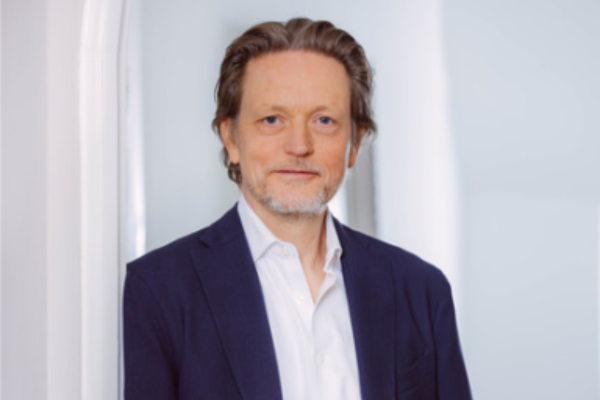
As the managing director of MAREVEST, Dr. Markus Rechlin has built more than just a portfolio of successful investments and coaching partnerships—he has cultivated a philosophy of leadership that balances strategy with emotional intelligence.
Calm, reflective, and intensely curious, Rechlin is driven by a desire not only to grow businesses but to grow the people behind them.
Operating from a home office next to the apartment he shares with his spouse, Rechlin’s days are shaped more by intention than by routine. “Instead of working with a full-time in-house team, I collaborate with a team of independent partners on a project-by-project basis,” he explains.
“The business model is designed to be flexible, and most collaboration happens remotely.” The balance allows Rechlin to shift fluidly between co-investing in mid-sized companies and coaching leadership teams—two endeavors he sees as deeply interconnected.
He’s especially energized by his work with search funds in Germany, where young entrepreneurs raise capital to acquire and lead established businesses. “I’m very convinced of the talent and commitment of the people I work with,” Rechlin says.
“They’re not just looking for financial backing—they’re open to leadership support during the investment phase, which makes the partnership even more meaningful.”
A Commitment to Keeping Work and Personal Life in Balance
Despite the executive scope of his work, Rechlin is committed to maintaining a sense of equilibrium in his personal life. He shares that he has several daily routines that ensure that his days stay productive and balanced. “I start my morning with some water, a 20-minute meditation, and a light physical exercise or yoga session. After breakfast, the working sessions begin.
During the day, I interrupt the working sessions with walks, cooking, and sometimes socialising with friends. I am pleased that I live very close to beautiful nature. I enjoy spending time at the river and in the woods, which is only five minutes away on foot. On some days, especially when I travel, it’s not possible to follow all my routines. However, I follow them as often as possible.”
Adding to his routine is trying to fit in three hours each day to work on writing a book that he hopes will inspire and support executives in “leading companies consciously and developing them holistically,” including practical examples, checklists, and templates.
Dr. Markus Rechlin’s dedication to conscious leadership is informed by a long journey of learning. “Early in my career, I focused mostly on ‘hard’ factors like strategy and structure,” he recalls. “But I quickly realized that ‘soft’ factors—people’s mindsets, habits, even subconscious routines—are just as critical. If you don’t understand those, you’re only managing half the business.”
“In addition to the learning journey, over the years, I also practiced extensive self-reflection to understand my belief system and habits better. A key conclusion from that path is that the body plays a vital role when it comes to routines, habits, and the attempt to change them.
I became familiar with various practices, including meditation, breathwork, and other techniques, to access the programs that life experiences burned into the cells of our bodies,” Rechlin shares.
Insight and Knowledge Shape Leadership Style
It’s an insight he’s developed through years of reading, study, and self-reflection. “My spouse is a psychologist, and she’s sometimes surprised at how deeply I understand topics like neuroscience and trauma,” he laughs.
“But that knowledge has been essential in shaping how I work with executive teams. Today, I systematically include both hard and soft factors in the frameworks I use.”
That holistic approach has been hard-won. Markus Rechlin is candid about the challenges that shaped him, like his early leadership experience at Dräger, where he was suddenly responsible for 200 people after years in the more analytical world of consulting. “I was thrown into the cold water,” he says.
“I spent entire days just talking to people—understanding their views, building trust.” He even made an unconventional gesture to build camaraderie: skipping business class on a flight to Japan and using the savings to rent a sailboat for a weekend retreat with his direct reports.
Still, not all relationships could be salvaged. Letting go of a team member who didn’t meet expectations was one of the hardest decisions he’s ever made. “It taught me that in any new leadership role, the priority is assembling the right leadership team—and actively building trust within that team.”
More recently, Rechlin faced a painful pivot at MAREVEST. He had built a team and an investment thesis around companies with strong leadership and culture, but the model proved difficult to execute in public markets. “We realized we couldn’t reliably assess leadership and culture from the outside,” he admits. “Many companies appear people-focused, but the reality can be quite different.”
Letting go of that vision was tough, he says. “I held onto it for too long, and looking back, I could’ve made the shift earlier. But the process wasn’t a waste—we developed a powerful playbook that I still use today.” The experience reinforced one of his core beliefs: success lies in knowing when to adapt.
The Influence of Role Models
Among those who shaped his thinking, Markus Rechlin points to Steve Barnes at Bain Capital as a role model. “Steve trusted me. He judged me not by hours worked or tasks completed, but by the feedback he received from portfolio company executives.
That kind of empowerment motivated me immensely.” He also recalls Barnes sharing his own journey toward greater authenticity as a leader—a moment that left a deep impression. “It was powerful to see someone at that level be so open about personal growth.”
That balance of trust and accountability is something Rechlin strives to replicate. At the core of his approach is a rare blend of intellectual discipline and human empathy. Whether he’s analyzing KPIs or guiding executives through cultural transformation, he brings a grounded, authentic presence to his work. “Ultimately, I believe we consist of body, mind, heart, and soul,” he says. “To be effective, you have to cultivate all of them.”
Asked what advice he would offer to emerging leaders in engineering, business, or private equity, Rechlin doesn’t hesitate. “Start with self-reflection.
Understand who you are, beyond what others expect of you. And don’t just manage time and tasks—manage your energy. Cultivate trust, gratitude, and joy. These are not just soft values; they’re strategic assets.”
Markus Rechlin isn’t just helping companies grow—he’s helping them grow up. And in doing so, he’s modeling a vision of leadership that’s as human as it is high performing.






Related